
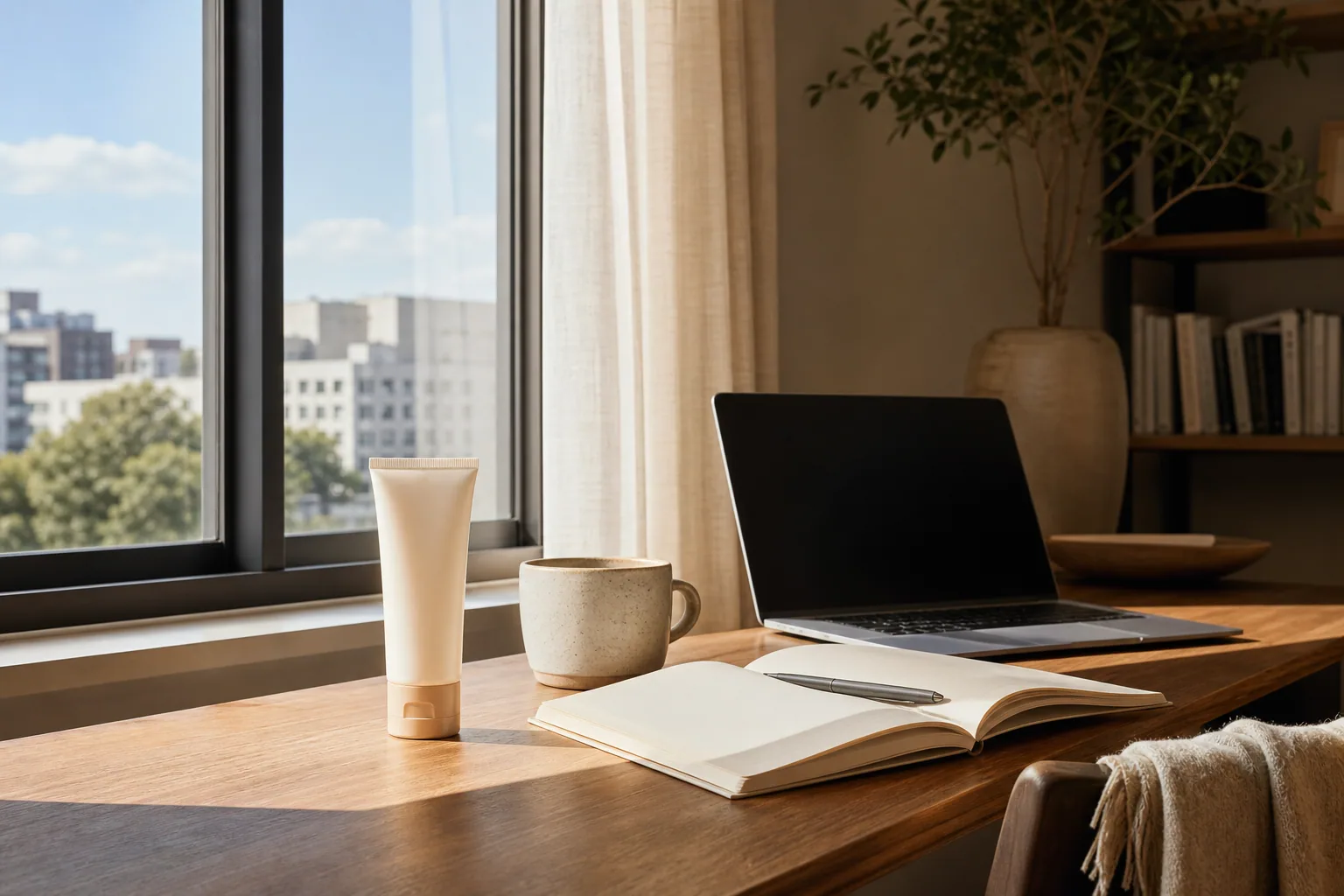
“Indoors” describes a building, not a single level of exposure. Working beside an uncovered window for hours is different from sitting deep inside a room. Driving in daylight is different from spending ten minutes near a kitchen window. A useful answer begins with your actual day.
Think in distance, daylight, and duration
Ask how close you are to the window, how much direct or bright daylight reaches you, and how long that repeats. Windows reduce some ultraviolet exposure, but they do not make every indoor setting identical. Your history, pigmentation goals, and advice from a clinician may also change the practical choice.
- Frequent driving or a desk beside bright windows makes daily sunscreen a simple default.
- Short periods far from windows may not need elaborate recalculation.
- Shade, clothing, curtains, and window treatments are part of protection too.
Choose a default you can tolerate
For many people, using a comfortable broad-spectrum sunscreen each morning is easier than performing a daily exposure audit. The best formula is not the one with the most dramatic marketing. It is one you can apply in a useful amount without persistent irritation or a finish you dislike.
Avoid turning protection into fear
Sun protection is a long-term habit, not a demand to avoid daylight. Use the mix of sunscreen, clothing, shade, and timing that fits the day. If you have a photosensitive condition, take photosensitizing medication, or are managing pigment changes with a clinician, follow their specific advice.