
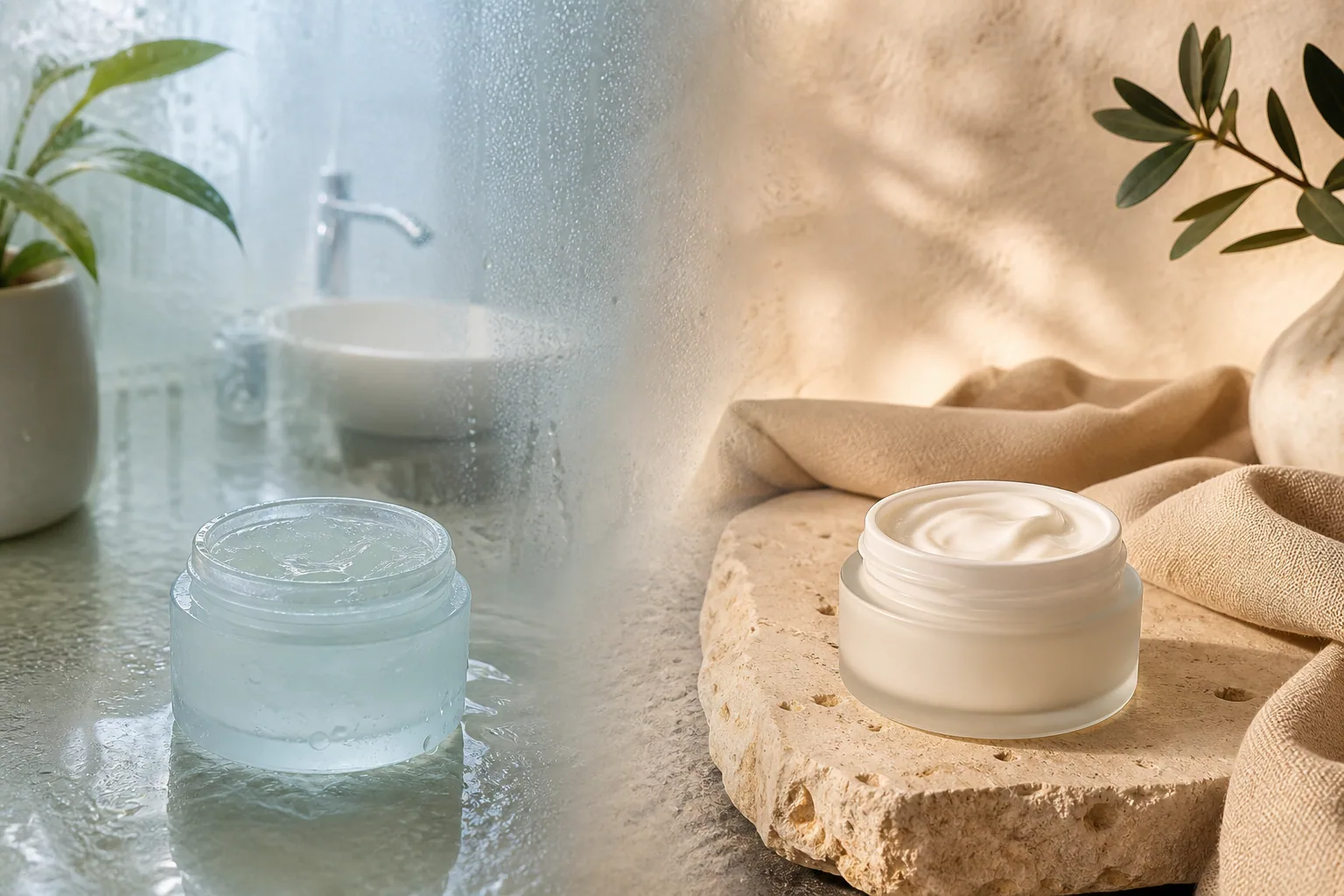
A moisturizer that feels perfect in a cold, dry winter can feel heavy in humid weather. That does not mean the formula changed or your skin type became meaningless. Product fit is the interaction between your skin, the rest of the routine, the air around you, and the finish you will tolerate.
Begin with the texture problem
Gels and light lotions often layer comfortably in heat or humidity. Creams and ointments usually reduce water loss more effectively when skin feels dry or the air is cold. These are starting points, not identities. Combination skin may need a lighter layer centrally and more support on dry areas.
- Humid weather: try a light lotion or gel before assuming you need no moisturizer.
- Dry or air-conditioned environments: consider a cream, especially on tight areas.
- After cleansing: applying to slightly damp skin can help trap water.
- With irritating treatments: choose comfort and simplicity over extra actives.
Use the full routine as context
A hydrating sunscreen may reduce what you need underneath in the morning. A drying acne or retinoid treatment may require more support at night. Judge the combined finish after ten minutes, not each product in isolation.
Let comfort be evidence
The useful moisturizer leaves skin comfortable without persistent sting, itch, or a finish that makes you avoid it. If painful cracking, a rash, or severe dryness continues despite gentle care, a dermatologist can help identify whether something else is involved.